

























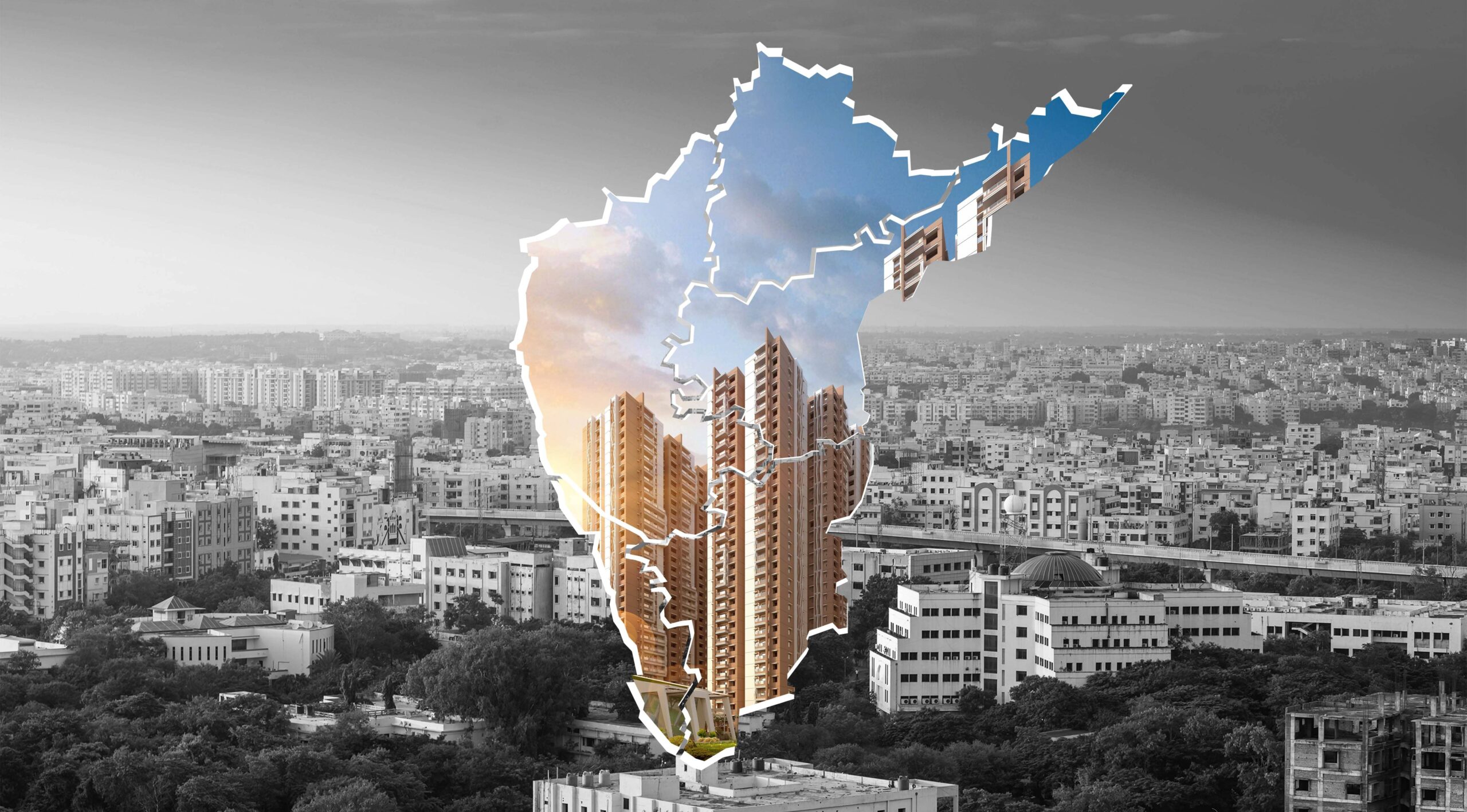
South India has emerged as India’s residential market leader, with Hyderabad, Bangalore, and Chennai together accounting for nearly half of all new home launches and sales in recent reporting cycles. For investors evaluating real estate as an asset class, geographic selection within India’s residential market significantly impacts returns. South India’s structural advantages, infrastructure velocity, IT employment concentration, supply discipline, and regulatory transparency make it a compelling choice for both end-users and investors.
Robust Infrastructure
In Southern cities, connectivity and public transport remain excellent. Therefore, cities like Hyderabad remain top choices for investors seeking well-connected residential corridors with strong infrastructure fundamentals. The state government’s policies on all round development across the four corners of the city is one more incentive for people looking for homes on all sides of the City and adjoining Suburbs. With the proposed expansion of Metro on all routes and adding new routes, it looks like there is no stopping of development.
Metro connectivity in leading South Indian cities has completely transformed the way in which people travel. For instance, in Bangalore alone, the planned real estate and infrastructural developments are getting completed across major areas like the Bangalore International Airport, Bidadi, Whitefield, and so on.
Strong Startup and IT Growth
The amazing growth and development of the IT infrastructure, public industries, and multinationals in Southern India should be taken note of. The Southern cities -including Hyderabad, Bangalore, and Chennai, have come up as the IT hubs for multiple multinationals and IT giants announcing a slew of expansions as well as the start-up boom that is fuelling this positive sentiment on the realty sector.
As more foreign investors continue establishing their headquarters or main offices in these cities, the scope for commercial and residential real estate continues expanding, driven by professional migration and employment growth
Reasonable Prices for properties
The immense availability of land at affordable prices in Southern metro cities has increased the overall demand for luxury housing. The presence of an increasing number of urban population -both from within the metropolitan cities and migration, has created a major demand for luxury as well as affordable real estate investment opportunities in South India.
Increasing Demand from NRIs
Due to the presence of ample social and physical infrastructure, impressive track record of the local developers, and the on-time completion of major real estate projects in leading cities, NRIs are getting drawn to the real estate market in South India.
NRI investments in India’s real estate sector have grown consistently, with South India capturing a disproportionate share due to transparent registration systems like Telangana’s Dharani portal and stronger developer delivery track records compared to some northern markets. NRI investors evaluating investment timing particularly value South India’s regulatory clarity and pricing efficiency.
For detailed guidance on NRI investment timing, including FEMA compliance and tax considerations, and comparisons of luxury vs mid-segment investment options, South India offers flexibility across both segments.
Higher Retail Growth
Metros and leading cities in South India have witnessed a steep rise in both commercial as well as retail growth. A series of supermarkets, leading retail chains, and malls has emerged to cater to the ongoing demands of the urban population.
Millennials serve as the driving force behind the change as they continue seeking a superior lifestyle. To cater to the pristine tastes, premium as well as international retail brands have started making presence in South India. This had led to the rapid development of major real estate projects -both commercial as well as residential, across major cities of South India.
Conclusion
Leading cities of South India -including Hyderabad, Bangalore, and Chennai, are witnessing growth at a rapid pace with particular micro-markets like OMR in Chennai, Bannerghatta in Bangalore, and Shankarpally in Hyderabad. Real estate projects depict immense opportunities for more growth in entire South India.
A conducive climate of real estate investments, the presence of a dynamic professional class of people, the rapid rise of co-working spaces, and a well-honed corporate ecosystem, have brought about core developments in successful real estate development projects across South India.
For investors seeking deeper analysis of real estate as an asset class, our investment strategy framework compares residential returns across equities and property, while projects like Honer Signatis (RERA: P02200005923) and Honer Aquantis (RERA: P02400001263) in Hyderabad’s growth corridors exemplify the infrastructure-driven demand discussed throughout this analysis.
Frequently Asked Questions
South India offers a combination of strong IT sector growth, robust infrastructure development with Metro expansion across major cities, transparent regulatory systems including RERA enforcement, and competitive pricing compared to northern metros like Mumbai and Delhi NCR.
Hyderabad, Bangalore, and Chennai lead South India’s residential market. Specific micro-markets showing consistent demand include Gachibowli and Financial District in Hyderabad, Outer Ring Road (ORR) and Whitefield in Bangalore, and Old Mahabalipuram Road (OMR) in Chennai.
Yes, NRI buyers have shown steady interest in South India, particularly in Hyderabad and Bangalore. Transparent registration processes like Telangana’s Dharani portal, reliable developer track records, and pricing efficiency in dollar terms make the region attractive for overseas investors.
Residential pricing in South India’s growth corridors is significantly more competitive than Mumbai and Delhi NCR. Hyderabad and Chennai offer 30-40% lower per-square-foot rates than Bangalore for equivalent micro-markets, while still delivering strong infrastructure and employment connectivity.
Check three factors: the project has valid RERA registration with clear delivery timelines, the location has confirmed infrastructure (Metro connectivity) or employment catalysts (IT parks, corporate offices) within proximity, and the developer has completed past projects on schedule with verified possession dates.