


























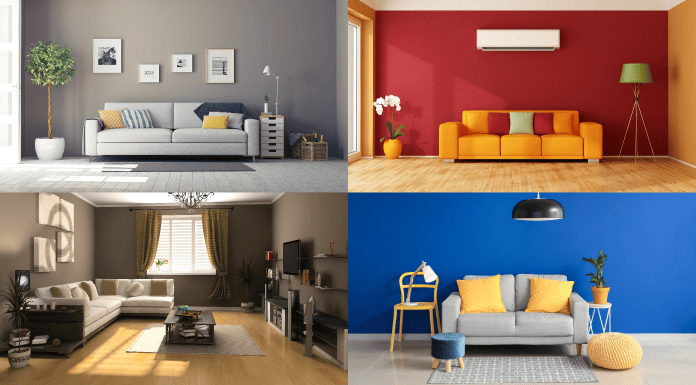
The home you live in is an expression of your family’s personality and lifestyle. Knowingly or unknowingly, every choice you make contributes to the vibe of the place.
If you are moving into a new home, start with the living room. It is the first impression and the place where most of your time will be spent. Start with the living room and work outward — once this palette is set, your kitchen colours tend to follow naturally.
If you want colours that also align with vastu principles, see our guide to colours in Vastu Shastra by room.
Best Colour Combination for Living Room — Top 15 Picks
Colour schemes are often underrated but they make a world of difference. You can either start with the walls and then choose furniture accordingly or flip the deal based on your choices. Make sure you go through all our recommendations to get a fair idea of the direction to take.
Key Takeaways
- Lighting determines whether your colour choice succeeds or fails. Under cool white LEDs, standard in most Indian apartments, yellow walls shift toward green. Check bulb temperature before committing.
- Earthy and neutral palettes are the only two categories that age well in Indian homes without active maintenance.
- Blue and white is the only combination in this list that is vastu-neutral. It works regardless of which direction your room faces.
- Every bold colour works at accent level. The exception is dark green, which reads as premium even at scale.
- Velvet furnishings absorb sound. In apartments near main roads or high-density buildings, that is not a small thing.
1. Green and Cream: Better in Year Three Than Year One
Cream is the smarter choice over white for Indian homes, and green is why. White walls yellow over time and make a room feel clinical between repaints. Cream ages more gracefully, and light green furnishings give it life without demanding attention. This is the combination that still looks right three years after you have stopped thinking about it.
- Bottle green curtains
- Forest green patterned upholstery
- Green paintings
- Dark brown coffee table
- Multi-coloured cushions
- Cream or greenish cream carpets
2. Yellow and Soft Tones: Check Your Lighting Before Committing
Check your lighting before committing to yellow walls. Under cool white LEDs, standard in most Indian apartments, yellow can shift toward green. In rooms with warm bulbs or strong natural light, it stays true. Yellow and soft neutrals is one of the best modern combinations when the light is right. Get the light wrong and the colour never looks the way you imagined it.
- Yellow walls
- Pastel upholstery
- Light coloured carpet
- Blue or white lamps
- Large and simple wall décor
3. Earthy Combinations: The Only Palette That Ages Well in Indian Homes
Earthy tones are the only colour palette that gets better with time in Indian homes. Terracotta, sand, and warm brown absorb the kind of gentle wear and dust that makes white walls look neglected and bright colours look faded. What reads as patina in an earthy room reads as a maintenance problem everywhere else. This combination rewards the long game.
- Brown furniture
- Decorated wallpaper
- Orange chair
- Wooden flooring
- Black TV cabinet
- Gold, red, and brown shades of cushions
4. Neutral Hues:Not Safe. Strategic
Neutral is not the safe choice. It is the strategic one. An off-white or greige base is the only palette that photographs well under both natural and artificial light. If you ever list your home, neutral rooms add perceived value that bold colour choices actively subtract. The options below are subtle, not boring.
- White or cream furniture
- Floral pattern curtains (with shades of white, green, and brown)
- Black and white cushions
- Golden frame for mirrors or photos
- White flowers in gold or glass vases
P.S. This may not be a great living room colour scheme if you have little kids and/or pets.
“Neutral is not the safe choice. It is the strategic one.”
5. Blue and White:The Vastu-Neutral Choice
Blue and white is the only combination in this list that works regardless of which direction your living room faces. Every vastu principle assigns specific colours to specific directions, but blue in its cooler shades sits outside most directional restrictions. It is also the most forgiving combination if your furniture changes. Nothing you add will clash badly.
- Cream or light blue curtains
- Blue patterned wallpaper
- Light blue furnishing
- White or light brown furniture
- Blocked print blue and white carpet
6. Indigo and Caramel: Depth Without Making the Room Feel Smaller
Indigo is the one deep colour that adds richness without making a room feel smaller. Dark navy, charcoal, and black all visually pull walls inward. Indigo holds depth without that closing effect. Paired with caramel, it reads as a considered, deliberate choice. Rooms that look like someone made decisions on purpose always feel better to be in.
- Indigo couch
- Light brown or caramel cushions
- Cream and black carpet
- Caramel walls
- Indigo wall décor
7. Coral Shades: Holds Up Under Any Light
Coral is one of the few warm colours that holds up under both warm and cool artificial lighting. Orange and red look harsh under cool LEDs. Coral keeps its warmth and freshness regardless. Paired with light yellow and white, it brings the energy of a bold choice with the forgiving quality of a neutral.
- White lamps or holders
- Coral couch
- Coral and cream cushions
- Light yellow carpet
- Light yellow curtains
- Dark brown coffee table
8. White and Black: Black and White: The Only Combination That Needs No Third Colour
Black and white is the only living room combination that is complete as it is. No accent wall, no third colour, no supporting tone. The high contrast does all the work. It also happens to be the most forgiving combination to maintain, what looks like a scuff on a coloured wall reads as character here.
- White carpet
- White walls
- Black photo frames
- White fabric furniture
- Black coffee table
- Black chandelier
- White curtains
9. Red and Charcoal: Red Is the Accent, Charcoal Is the Anchor
Red fails in living rooms almost always for the same reason. Too much of it. One red carpet in a charcoal and white room draws every eye in. Three red accents cancel each other and the room just feels busy. This combination only works if you treat red as the exception, not the rule. Two accents. No more.
- Red carpet
- White and charcoal walls
- Black doors
- Yellow or brown couch
- Light coloured wall décor
“Red fails in living rooms almost always for the same reason. Too much of it.”
10. Bright Yellow and Pastel: Best Reserved for North-Facing Rooms
Bright yellow is the only wall colour that raises a room’s perceived temperature. Not the actual temperature — how warm the space feels. In Hyderabad’s summers, this matters. Bright yellow works best in north-facing rooms that get cooler indirect light. In south or west-facing rooms that already get strong afternoon sun, it will make the space feel hotter than it is.
- Flowery fabric couch
- Pastel chairs
- Sunny yellow wall colour
- White doors and curtains
- White lamps
11. Simple Stripes
Stripes do something no solid colour can. Vertical stripes on one wall add height to low-ceilinged rooms. Horizontal stripes widen narrow ones. Most apartments in older buildings have 9-foot ceilings or lower. A single striped accent wall is the lowest-cost way to correct that proportion without a structural change.
- Striped couch and cushions
- Block patterned curtains
- White walls
- Earthy carpet
12. Bright Green and White: Let the Walls Go Dark and Furniture Float
Dark green reads as premium in a way that other bold colours do not. Deep blue reads as corporate. Red reads as aggressive. Dark green at scale reads as intentional and considered. Paired with white furniture, it works in well-lit rooms where the contrast can breathe. This is a committed choice. It rewards conviction.
- Black and white striped carpet or rug
- White couch with green designs
- White or pastel wall décor
- Green upholstery
13. Velvet Colours: The Texture That Makes Colour Come Alive
Velvet is the one furnishing choice that improves how a room sounds, not just how it looks. Heavy velvet absorbs sound. In apartments near main roads or high-density buildings, this matters more than most guides acknowledge. Olive green, plum, cream, navy. The colour is secondary. The velvet is the real decision.
- Olive green velvet curtains
- Cream or beige velvet upholstery
- Shades of plum and blue for furnishing
14. Rosy Combinations
Pink shifts more dramatically with paint finish than any other colour. Matte reads as soft and quiet. Satin or semi-gloss, the same colour code reads as deliberate and fashion-forward. Before ordering, check the finish. Rose gold and soft pink in the right finish add warmth and character without reading as overly feminine.
- Pinkish couch
- Light pink carpet or rug
- White and pink lamps
- Pink floral curtains
15. Royal Colours: Where the Room Carries Cultural Memory
Royal combinations are the one palette where expensive furniture works against you. Embroidered cushions, handwoven textiles, vintage chairs — found at Laad Bazaar or Nampally for a fraction of what modern pieces cost — carry the authenticity this look needs. What makes a royal room feel right is age and craft, not price.
- Bolster pillows
- Embroidered cushions
- Elephant motifs
- Paintings depicting Indian culture and art
- Vintage chairs
“What makes a royal room feel right is age and craft, not price.”
Conclusion
The right colour combination depends on your personal taste, the natural light in your home, and the furniture you plan to build around. Use these ideas as a starting point, not a rulebook.
Your living room is only as good as the home it is in. See what Honer Homes is building in Gopanpally, Kukatpally, and HITEC City.
Frequently Asked Questions
As per vastu, the best colours for a living room are white, light yellow, green, and beige. These shades are associated with positive energy and calm. Blue and green are considered auspicious for north and east-facing living rooms respectively. Avoid red and black as primary wall colours in the living room.
Light colours like off-white, pale grey, and soft beige reflect more light and create the illusion of space. For small flats, a single contrast wall in a muted tone works better than four coloured walls. Avoid dark or saturated colours on all four walls in rooms under 200 sq ft.
The most versatile two-colour combinations are white with sage green, beige with terracotta, and grey with navy blue. For Indian homes, off-white paired with a single earthy accent wall tends to age well and suit varying furniture choices over time.
North-facing rooms receive cooler, indirect light. Warm colours like cream, pale yellow, peach, or soft terracotta compensate for the reduced warmth. Avoid cool greys and blues, which can make the space feel dull in low natural light conditions.
Deep reds, dark browns, and black are best avoided as primary wall colours. They absorb light and make spaces feel smaller and heavier. If you want depth, use these as accents on a single wall or through furnishings rather than as base colours.